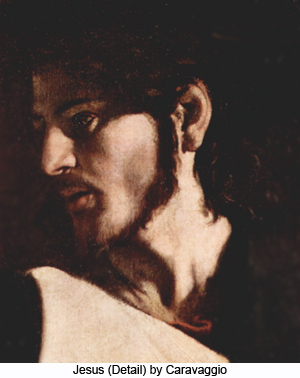
Today’s blog is based on the Episcopal reading for the day along with a headline from world news:
Protest says, “Forget Luxury Homes and keep the wall that reminds of struggle against evil”

Section of Berlin wall due for demolition
Romans 3:19-31
19 Now we know that whatever the law says, it speaks to those who are under the law, so that every mouth may be silenced, and the whole world may be held accountable to God.20For ‘no human being will be justified in his sight’ by deeds prescribed by the law, for through the law comes the knowledge of sin.
Righteousness through Faith
21 But now, irrespective of law, the righteousness of God has been disclosed, and is attested by the law and the prophets,22the righteousness of God through faith in Jesus Christ* for all who believe. For there is no distinction,23since all have sinned and fall short of the glory of God;24they are now justified by his grace as a gift, through the redemption that is in Christ Jesus,25whom God put forward as a sacrifice of atonement* by his blood, effective through faith. He did this to show his righteousness, because in his divine forbearance he had passed over the sins previously committed;26it was to prove at the present time that he himself is righteous and that he justifies the one who has faith in Jesus.*
27 Then what becomes of boasting? It is excluded. By what law? By that of works? No, but by the law of faith.28For we hold that a person is justified by faith apart from works prescribed by the law.29Or is God the God of Jews only? Is he not the God of Gentiles also? Yes, of Gentiles also,30since God is one; and he will justify the circumcised on the ground of faith and the uncircumcised through that same faith.31Do we then overthrow the law by this faith? By no means! On the contrary, we uphold the law.
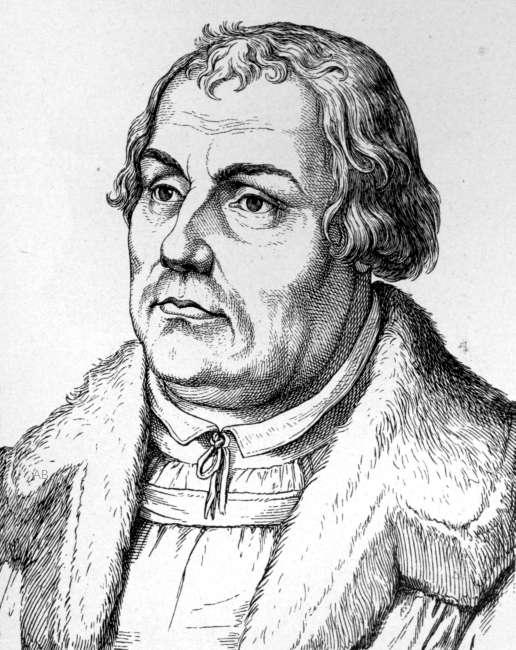
Martin Luther
This passage is one of the most contested in the whole bible. Famously, Martin Luther struggled with it, as it seemed to say that those who had faith would be justified, that is, made into just or righteous people. He knew that he was still a sinner and therefore concluded that he might not have faith, and would be damned. But then he came to a new understanding. The righteousness or justice of God is not here referring to his divine holiness but to his act of “passing judgement” on humanity; he has done so in Christ, Luther says, and the verdict is “not guilty”. Yes, we are still sinners, but in his free grace, God counts us as just, if we have faith in his Son. This kind of righteousness or justness in human beings was described as “imputed” as it didn’t mean that they were altogether just but were treated as such by God.
This interpretation has always been controverted by the Catholic Church along with many reformed churches who have said that believers are transformed into genuinely just and righteous people by the grace of God in Christ rather than by painstaking obedience to moral rules. Their faith in God’s goodness transforms them and makes them good people. This sounds reasonable until we remember Luther’s problem: he knew he was not a good person. When I’m being honest I have to make the same confession. If I have faith, why am I not a better person?
One helpful answer is that the transformation is not an instant miracle but a process. Paul himself is clear that “even those who believe groan inwardly as we wait for God to set our whole beings free, for we are rescued-but only in hope!” (Romans 8). The transformation of our lives is a continuous process of growth in God’s spirit which will be complete only when “the kingdom comes”-beyond this world and this history.
Against Luther then, I think that Paul’s word “justified” refers to a real transformation of sinful people into just people through God’s grace in Christ, an act of rescue (salvation) which has begun but is by no means complete. But how has God done this?
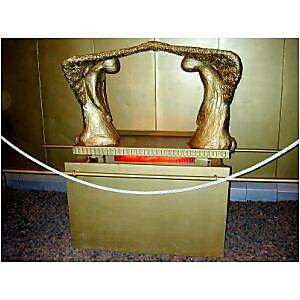
The “mercy seat”, throne of the invisible God
Paul uses two difficult concepts, “redemption” and “sacrifice of atonement”. Redemption means that God has bought us back from slavery to evil and death. We had been captured by these powers and held hostage, until God intervened to pay the price and buy as back into his family. And the price? Well, Paul says,”redemption in Christ” and he calls Christ, “a sacrifice of atonement in his blood”. The word translated sacrifice of atonement refers to the so-called mercy-seat on the Ark of the Covenant (Exodus 25) where, it was imagined, the invisible God sat and dispensed mercy. On the Day of Expiation this was sprinkled with blood. Paul says Christ is this “mercy – seat”, that is, he is the place of atonement or reconciliation between humanity and God, because his blood is the price God-and-his-Son have paid to buy back God’s children held hostage by evil and death.
This explanation tells a mythological story involving supernatural agencies. Can it be cashed out into the coinage of everyday langauge? My own answer is that it can’t fully be cashed out because it represents the ultimate miracle of God’s saving justice. We can nevertheless note that “being hostages of evil and death” is not incomprehensible to honest people. We are forever promising amendments of life which we find ourselves unable to fulfil-not to mention the sense of darkening shadows as the years go by. Moreover, when we consider our faith, we know that the initiative has always been with God, and that when we keep faith with Him we do have a sense of homecoming. But the powers that have held us, do not let go easily. Or is that we don’t let go of them? In any case the crucial “letting go” happens when we believe that God-in-his-Son has entered the place of imprisonment and shed blood to set us free. Am I simply talking about a trust in God’s love? Yes, but I need to define the nature of this love in a story about the Almighty One becoming weak enough to fight and suffer alongside me.
Paul is helpful because he won’t leave his message vague. Yes, he’s talking about salvation through God’s love, but he wants to tell his readers what these words mean.
 Emmock's Blog