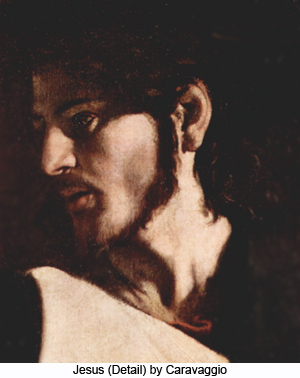
Today’s blog is based on the Episcopal daily reading along with a headline from world news:
The Cardinal confesses sexual misconduct
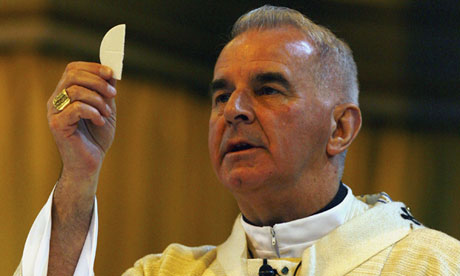
Cardinal Keith O’Brien
Romans 4:1-12
4What then are we to say was gained by* Abraham, our ancestor according to the flesh?2For if Abraham was justified by works, he has something to boast about, but not before God.3For what does the scripture say? ‘Abraham believed God, and it was reckoned to him as righteousness.’4Now to one who works, wages are not reckoned as a gift but as something due.5But to one who without works trusts him who justifies the ungodly, such faith is reckoned as righteousness.6So also David speaks of the blessedness of those to whom God reckons righteousness irrespective of works:
7 ‘Blessed are those whose iniquities are forgiven, and whose sins are covered;
8 blessed is the one against whom the Lord will not reckon sin.’
9 Is this blessedness, then, pronounced only on the circumcised, or also on the uncircumcised? We say, ‘Faith was reckoned to Abraham as righteousness.’10How then was it reckoned to him? Was it before or after he had been circumcised? It was not after, but before he was circumcised.11He received the sign of circumcision as a seal of the righteousness that he had by faith while he was still uncircumcised. The purpose was to make him the ancestor of all who believe without being circumcised and who thus have righteousness reckoned to them,12and likewise the ancestor of the circumcised who are not only circumcised but who also follow the example of the faith that our ancestor Abraham had before he was circumcised.

Abraham on his journey of trust in God
Paul is writing to a mixed church community of Jews and Gentiles, taking up the issue of the Jewish religious law, the Torah. So naturally he doesn’t imediately use the example of Moses the lawgiver, but rather of Abraham, the man of faith. Paul has two arguments against the observance of Torah.
1. It’s surplus to requirements now that Jesus Messiah has shown a better way, the way of faith or trust.
2. It offers righteousness only on the basis of complete obedience, which nobody manages.
Paul says Abraham’s trust in God was”reckoned as righteousness”. Paul does not mean Abraham was not a righteous man. He means that although he did not keep a religious law because he knew nothing of it, his trust in God, expressed in his ready obedience to God’s commands, put him in credit in God’s generous accounting. He didn’t earn this credit by Torah observance, but received it as a gift from God who reckoned him as a righteous man. Those who know their own sins yet put their trust in God, Paul adds, share the blessedness of Abraham. Yes, at a certain point in his life, Abraham was circumcised; but this was not a means of becoming righteous, just the opposite: it was an affirmation of his righeousness through trust in God. As the father of all who trust in God, Abraham can be claimed as ancestor by both Jews and Gentiles who trust God through Messiah Jesus.

The prodigal son-reckoned as righteous
Cardinal Keith O ‘Brien, my fellow Scot and brother in Christ, has resigned confessing that his sexual behaviour has been sinful. A number of priests have lately reported his past behaviour towards them as predatory. How has my brother gone wrong in this way, damaging himself and others? Well, through a human weakness which we all share, of course, but also through trusting a competitive and heirarchical religious institution rather than, or at least alonsgside, the God of love. In obeying the many, difficult commands of a religious law he gained credit and advanced to the rank of Cardinal, without trusting God enough to admit his own sexual needs or to avoid imposing them on others, over whom he held authority.
It is easy to argue the value of religious practice and hierarchical institutions. Of course they give an attactive rigour and solidity to a religious community. Paul however recognised that Jesus Messiah was not creating a new religion, but rather new human beings who could trust the God who trusted them. Perhaps amongst such people Keith O’Brien would have found acceptance, forgiveness and a means of flourishing. I hope he, and those he harmed, may yet do so.
 Emmock's Blog