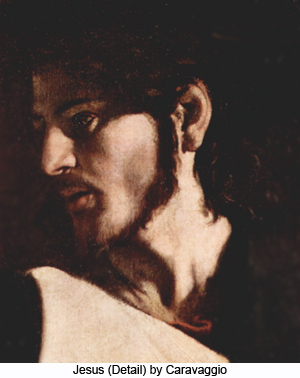
Today’s Bible reading provides a devastating analysis of the human condition.
Daily Headline: “It seemed a good idea at the time”

Self-deception. Huhne goes to prison
Romans 7:13-25
13 Did what is good, then, bring death to me? By no means! It was sin, working death in me through what is good, in order that sin might be shown to be sin, and through the commandment might become sinful beyond measure.
The Inner Conflict
14 For we know that the law is spiritual; but I am of the flesh, sold into slavery under sin.*15I do not understand my own actions. For I do not do what I want, but I do the very thing I hate.16Now if I do what I do not want, I agree that the law is good.17But in fact it is no longer I that do it, but sin that dwells within me.18For I know that nothing good dwells within me, that is, in my flesh. I can will what is right, but I cannot do it.19For I do not do the good I want, but the evil I do not want is what I do.20Now if I do what I do not want, it is no longer I that do it, but sin that dwells within me.
21 So I find it to be a law that when I want to do what is good, evil lies close at hand.22For I delight in the law of God in my inmost self,23but I see in my members another law at war with the law of my mind, making me captive to the law of sin that dwells in my members.24Wretched man that I am! Who will rescue me from this body of death?25Thanks be to God through Jesus Christ our Lord!
So then, with my mind I am a slave to the law of God, but with my flesh I am a slave to the law of sin.
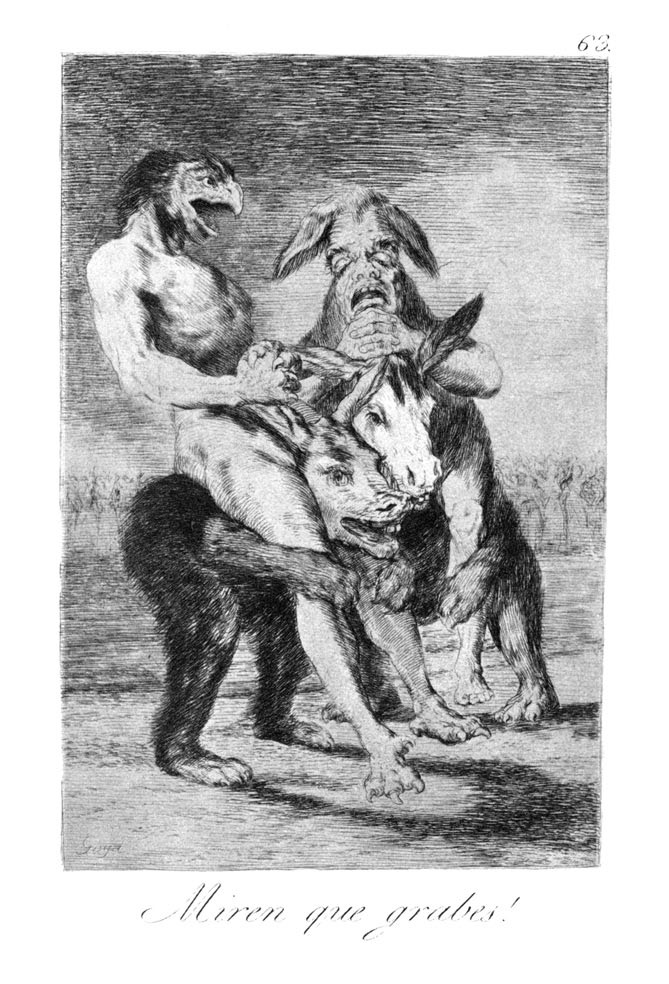
Goya: The wisdom of the “the flesh”
THE TROUBLE WITH FLESH
This famous passage can easily convince the careless reader that Paul saw the body as sinful and the mind as virtuous. Paul is a little careless with his terminology, but it’s clear that he doesn’t hold that view. The difficulty is his use of “flesh” (Greek sarx). For Paul, this word does not refer to part of a human person, but to the whole person as determined by “flesh and blood” needs and desires. A “fleshly” person looks only to his own satisfactions to the exclusion of God and his neighbour. This condition is almost identical with “sin”, which specifically means separation from God; whereas “flesh” means the behaviours which result from that separation.
THE DIVIDED SELF
Paul has already stated that when a person offers his body to sin, his bodily members become instruments of slavery. The harmony of the human person is disrupted, because he is created to belong to God but has made himself a slave of evil. It is this desperate and unending struggle within the human person which Paul documents in this passage and sums up in the famous words, “The good that I would, I do not; and the evil that I would not, that I do.” (King James’ Version) This is the condition of “being in the flesh”. Paul locates the knowledge of a person’s true condition in her mind, that is, in her God-given intelligence, but unlike many of his Greek contemporaries he does not think that salvation can come through the use of the mind. For him, the mind is engaged in a struggle it cannot win. Because human beings are created to place their ultimate trust in God, the decision to place their trust in themselves, destroys the unity of their being and leaves them wretched.
SELF – DECEPTION
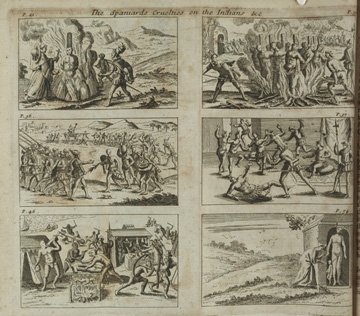
Cover of Bartolomeo De Las Casas, ” A short history of the Spanish Conquest”
This is not a private confession. The “I” in this passage is not Paul. Nor is it a piece of ancient psychology. It is a theological analysis of the human condition, just as much as the story of Adam and Eve in the Hebrew bible, from which it draws its profound insights. Whatever people feel is happening in their lives, this is what’s really happening, Paul says. I’ve been reading a lot recently about the early growth of the Spanish Empire in the New World. Many of those who took part in it thought they were engaged in a civilising and Christianising venture. In fact they were stealing huge tracts of land and exterminating native peoples, with consequences down to the present day. Conscious of the weight of such evil, Paul asks “Who will rescue?” and answers, “God through Jesus Messiah.” The nature of the rescue is further spelt out in tomorrow’s reading.
 Emmock's Blog