This blog offers a meditation on the Reformed Church daily readings along with a headline from world news.
EGYPTIAN POLICE HAD ORDERS TO USE LIVE AMMO AGAINST DEMO

Unsmiling power
Luke 3:15-22
J.B. Phillips New Testament (PHILLIPS)
15-17 The people were in a great state of expectation and were inwardly discussing whether John could possibly be Christ. But John answered them all in these words, “It is true that I baptise you with water, but the one who follows me is stronger than I am—indeed I am not fit to undo his shoe-laces—he will baptise you with the fire of the Holy Spirit. He will come all ready to separate the wheat from the chaff, and to clear the rubbish from his threshing-floor. The wheat he will gather into his barn and the chaff he will burn with a fire that cannot be put out.”
18-20 These and many other things John said to the people as he exhorted them and announced the good news. But the tetrarch Herod, who had been condemned by John in the affair of Herodias, his brother’s wife, as well as for the other evil things that he had done, crowned his misdeeds by putting John in prison.
Jesus is himself baptised
21-22 When all the people had been baptised, and Jesus was praying after his own baptism, Heaven opened and the Holy Spirit came down upon him in the bodily form of a dove. Then there came a voice from Heaven, saying, “You are my dearly-loved Son, in whom I am well pleased.”

smile?
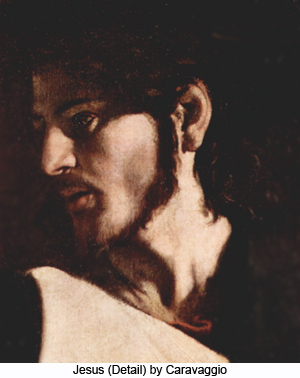
Luke tells the story so that the reader shares what is reported of the crowd: great expectations of the One who is to come bringing the definitive judgement from God. Then Luke notes the sad end of John’s ministry, introducing a sense of foreboding; after which he writes his first words about Jesus’ ministry, “When all the people had been baptised, and Jesus was praying after his own baptism….” Is this what all the fuss was about? A man baptised with all the rest of the people? Is this the judge, a man making a new start and absorbed in prayer? Well, yes it is, Luke tells the reader. He is the One but he comes quietly. Only he hears God’s voice, only he sees the dove of the spirit, but he knows that this gentleness is God’s way and that he is the One who bears God’s delight so that it may be shared with everyone.
We should be aware of the grandeur of Luke’s theology. He is writing about God setting the whole world to rights and he begins with God’s delight in his human son. Universal salvation begins with God’s smile. As Luke will show us however God’s smile is also the axe laid to the roots of the tree. The One who communicates that smile will disempower the religious authorities, overturn the social hierarchy, challenge the pretensions of secular empire-everything that rests on a unsmiling power will fall before the One who transmits the delight of God.
A theology of the delight of God! Who could resist its appeal?

smile?
Of course, as Luke hints, there are people who resist it and they are very powerful, which is the reason God’s messengers like John the Baptist and Jesus the Son come to a bad end, as the world thinks. But the smile is not overruled; indeed one can hear it change to a broad chuckle as the stone is rolled away and the Son is re-united with the Father.
 Emmock's Blog