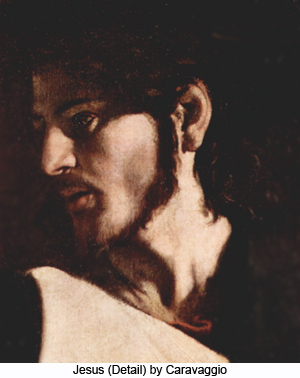
MATTHEW 17:1
After six days, Jesus took with him Peter, James and his brother John and led them up a high mountain, by themselves; and he was transformed before them, and his face shone like the sun, and his clothing became white like light. And – see this- Moses and Elijah were seen by them, talking with Jesus. Peter spoke up, “Master, being here is precious to us! If you like I will make three shelters, one for you, one for Moses and one for Elijah.” While he was still speaking -see this-a cloud full of light came over them, and -see this- a voice came from the cloud, “This is my son, the loved one, in whom I take delight; listen to him!” When they heard this, the pupils fell face-down to the ground, utterly terrified.
But Jesus came and touched them saying, “Get up. Don’t be afraid.”
They raised their eyes and saw nobody but only Jesus himself.
As they were descending the mountain, Jesus commanded them, “Tell nobody about the vision until the son of man has awakened from the dead.” Then the pupils asked him, ” How come the legal experts say that Elijah must come first?” He answered, “Elijah does come first to put everything in order. But I tell you that Elijah came and they did not recognise him and did what they liked with him. And the son of man is also about to suffer at their hands.”
Then the pupils understood that he was talking about John the Dipper.
In the magical realism of Matthew and the other gospellers, you do not describe Jesus relationship with God in trust and love; you show him transformed in God’s presence. You do not describe how he learns, accepts, interprets and lives the legal and prophetic traditions of Israel; you show him talking with Moses and Elijah. Matthew hones the slightly fuller account by Mark to represent as accurately as possible the uniqueness of Jesus as God’s beloved, and as the fulfilment of the destiny of Israel. Those who wish to be faithful to their God and their people must listen to him.
The identification of John the Dipper with Elijah is basic to the gospel tradition, which incorporates the ancient expectation of Israel. There are still stories of Elijah’s arrival, as late as the tales of the 18th/ 19th century Hasidim.
The glory of God, (Hebrew Kavod), also called the dwelling of God, (Hebrew shekinah) was imagined by biblical authors as a shining cloud. This leads to the almost impossible expression “a shining cloud overshadowed them” which I have modified as ” came over.” God is associated with light, so Jesus’ physical presence is suffused with light. The divine voice identifies Jesus as ‘son’ ‘beloved’ and a cause of ‘God’s delight.” These words emphasise intimacy rather than power. Indeed the figure of the ‘persuasive creator’ is the unity of the magical, miraculous Jesus, and the real, rejected, suffering Jesus, presented by Matthew.
This revelation is called a ‘vision’ by Jesus, who knows that it can only make sense in the light of his awakening from the dead. The frequency of the biblical “see this!” is Matthew’s indication that this event is significant for understanding Jesus’ nature.
There is a connection asserted by the greek word for shelters or booths with the Jewish festival of booths by which the settled population of Israel returned symbolically to the booths in which they lived prior to their entry into the promised land. It maintains the hope of a new exodus into the new world promised by the prophets. Matthew would have associated the festival and its meaning with Jesus’ death and resurrection.His allusive narrative keeps pointing the reader in the right direction.
 Emmock's Blog