- This blog follows the daily bible readings of the Catholic Church
- ACTS 15: 1-6
- Some who had come down from Judea were instructing the brothers, “Unless you are circumcised according to the Mosaic practice, you cannot be saved” Because there arose no little dissension and debate by Paul and Barnabas with them, it was decided that Paul, Barnabas, and some of the others should go up to Jerusalem to the apostles and presbyters about this question. They were sent on their journey by the church, and passed through Phoenicia and Samaria telling of the conversion of the Gentiles, and brought great joy to all the brothers. 4 When they arrived in Jerusalem, they were welcomed by the church, as well as by the apostles and the presbyters, and they reported what God had done with them. 5 But some from the party of the Pharisees who had become believers stood up and said, “It is necessary to circumcise them and direct them to observe the Mosaic law.”
- The apostles gathered to discuss this matter with the presbyters.
- JOHN 15: 1-8
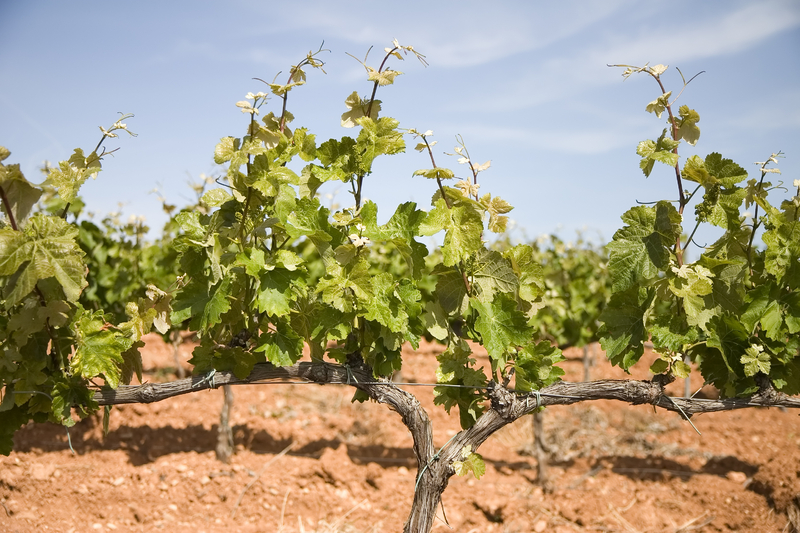
I am the vine and you are the branches
Jesus said to his disciples:
“I am the true vine, and my Father is the vine grower.
He takes away every branch in me that does not bear fruit,
and everyone that does he prunes so that it bears more fruit.
You are already pruned because of the word that I spoke to you.
Remain in me, as I remain in you.
Just as a branch cannot bear fruit on its own
unless it remains on the vine,
so neither can you unless you remain in me.
I am the vine, you are the branches.
Whoever remains in me and I in him will bear much fruit,
because without me you can do nothing.
Anyone who does not remain in me
will be thrown out like a branch and wither;
people will gather them and throw them into a fire
and they will be burned.
If you remain in me and my words remain in you,
ask for whatever you want and it will be done for you.
By this is my Father glorified,
that you bear much fruit and become my disciples.”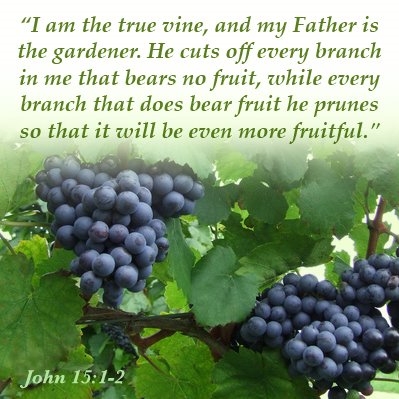
Today’s readings turn on the issue of the “true vine”. The people of Israel saw themselves at the vine planted by God. Birth amongst the holy people made a person part of the vine, that is, part of the life giving organism created by God. An individual’s life was not fruitful on its own, but only as part of the vine. Those not born Jews could be grafted into the vine by becoming Jews, that is, through circumcision in the case of males. The life of Jesus, and especially his crucifixion and resurrection led to a debate about the source of true life-was it Israel or Jesus? Jesus had lived the life that Israel had been intended to live, the life of God’s own son, therefore he was now the plant of God, in whom both Jews and Gentiles might be grafted by baptism and the gift of the spirit.
In the Acts passage we see that the transition from Israel to Jesus as the source of life was not achieved without fierce debate. Although the precise terms of the argument are no longer relevant, we can see today how “Israel=God’s plant” can be used to catastrophic effect by the religious right in Israel; and how “church=God’s plant” can stifle reform in the Roman Catholic and other churches. The churches of the reformation should be able to insist that life and renewal are found “in Jesus alone” that is, in Jesus as the common life of all peoples.
John’s gospel sets out the homely yet profound teaching of the Father as gardener and Jesus as true vine. Only by dwelling in the vine, that is, by joining our lives with Jesus’ through keeping his word, can we be nourished by the divine life and become fruitful persons. .John is at pains to emphasise that this mutual indwelling is not a mystical thing, but rather practical: to share Jesus’ life is to do the things he did, and more, otherwise it has no reality. Those who imagine they have faith without this shared living, are in danger of becoming dry and unfruitful.

