
PERU FAILS TO PROTECT UNCONTACTED TRIBE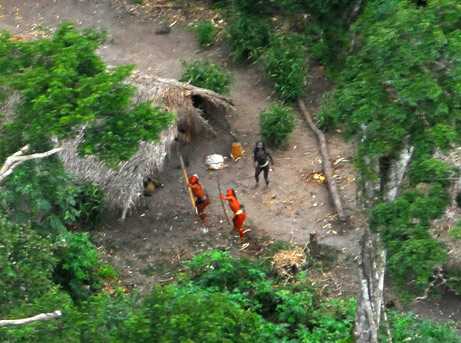
Feast of St Brigid
Galatians 4:12-20
12 Friends, I beg you, become as I am, for I also have become as you are. You have done me no wrong. 13You know that it was because of a physical infirmity that I first announced the gospel to you; 14though my condition put you to the test, you did not scorn or despise me, but welcomed me as an angel of God, as Christ Jesus. 15What has become of the goodwill you felt? For I testify that, had it been possible, you would have torn out your eyes and given them to me. 16Have I now become your enemy by telling you the truth? 17They make much of you, but for no good purpose; they want to exclude you, so that you may make much of them. 18It is good to be made much of for a good purpose at all times, and not only when I am present with you. 19My little children, for whom I am again in the pain of childbirth until Christ is formed in you, 20I wish I were present with you now and could change my tone, for I am perplexed about you.
…………………………………………
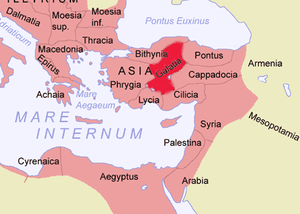 The mission in Galatia was probably the first of Paul’s major successes. After a lengthy journey into what must have been unknown territory, to a people of whose language and customs he was ignorant, he was able to establish a church. The Galatians were Celts, related to the tribes of France and Britain, sharing the Celtic culture. If we think of the delight which all Celtic art expresses in variation and elaboration we may understand the desire of the Galatian converts for special festival days and religious niceties. (The story of St. Brigid, whose feast day this is, is an impenetrable thicket of Celtic religiosity, almost certainly springing from an existing Celtic goddess. Nevertheless, through the device of making Brigid a bishop, the hagiographers preserved some of their ancient religion’s female power). Paul is opposed to everything that moves people away from the simplicity of God’s love in Christ. He reminds them of their own goodness to him and their friendship with him. Finally he imagines himself as their spiritual mother, in labour “until Christ is formed in you.” He labours so that they may be re-born as children of God, as Christ! Paul’s passionate commitment is not to making them Christians but to making them Christ.
The news headline quoted concerns an un-contacted tribe on the Brazil-Peruvian border threatened by illegal logging operations by people who will expose them to dangerous illness. In contrast, Paul’s contact with peoples unknown to him was always modest: he arrived alone, or with one or two companions, accepting the dangers of offence and rejection, to share his “good news”. His modest humanity in mission should be a model for the church in all times.
Mark 8:1-10
8In those days when there was again a great crowd without anything to eat, he called his disciples and said to them, 2‘I have compassion for the crowd, because they have been with me now for three days and have nothing to eat. 3If I send them away hungry to their homes, they will faint on the way—and some of them have come from a great distance.’ 4His disciples replied, ‘How can one feed these people with bread here in the desert?’ 5He asked them, ‘How many loaves do you have?’ They said, ‘Seven.’ 6Then he ordered the crowd to sit down on the ground; and he took the seven loaves, and after giving thanks he broke them and gave them to his disciples to distribute; and they distributed them to the crowd. 7They had also a few small fish; and after blessing them, he ordered that these too should be distributed. 8They ate and were filled; and they took up the broken pieces left over, seven baskets full. 9Now there were about four thousand people. And he sent them away. 10And immediately he got into the boat with his disciples and went to the district of Dalmanutha. 
Mark probably found a number of accounts of a “desert feeding” in his sources. He used one version (5000 people 12 baskets left over) as an image of Jesus the true king of Israel (12 tribes); and this version (4000 people 7 baskets left over) as an image of Jesus as true king of the Gentiles (traditionally 7 nations). The compassion of Jesus is exercised for those who have come from a “great distance.” The place of feeding is also relevant: the desert, where Israel received Manna from God and accepted his covenant. Those who meet Jesus in the “desert” (the place of no earthly power, ultimately the place of the cross) regardless of their worldly origins are fed by him and become his people. Personal salvation and the politics of the kingdom are closely bound together in Mark’s stories. Egyptians Christians, who have met Jesus in the place of the cross (in persecution), will be able to make a special contribution to their country’s future.
 Emmock's Blog