
“EGYPTIANS NEAR FREEDOM”
This blog provides a meditation on the Revised Common Lectionary along with a headline from world news
Galatians 4:21-31.
21 Tell me, you who desire to be subject to the law, will you not listen to the law? 22For it is written that Abraham had two sons, one by a slave woman and the other by a free woman. 23One, the child of the slave, was born according to the flesh; the other, the child of the free woman, was born through the promise. 24Now this is an allegory: these women are two covenants. One woman, in fact, is Hagar, from Mount Sinai, bearing children for slavery. 25Now Hagar is Mount Sinai in Arabia and corresponds to the present Jerusalem, for she is in slavery with her children. 26But the other woman corresponds to the Jerusalem above; she is free, and she is our 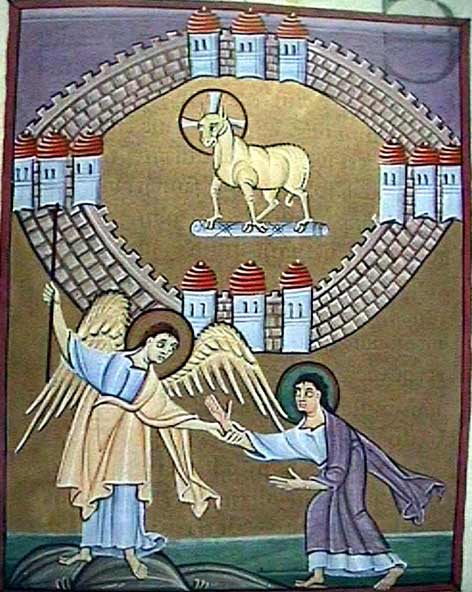 mother. 27For it is written,
‘Rejoice, you childless one, you who bear no children,
burst into song and shout, you who endure no birth pangs;
for the children of the desolate woman are more numerous
than the children of the one who is married.’
28Now you, my friends, are children of the promise, like Isaac. 29But just as at that time the child who was born according to the flesh persecuted the child who was born according to the Spirit, so it is now also. 30But what does the scripture say? ‘Drive out the slave and her child; for the child of the slave will not share the inheritance with the child of the free woman.’ 31So then, friends, we are children, not of the slave but of the free
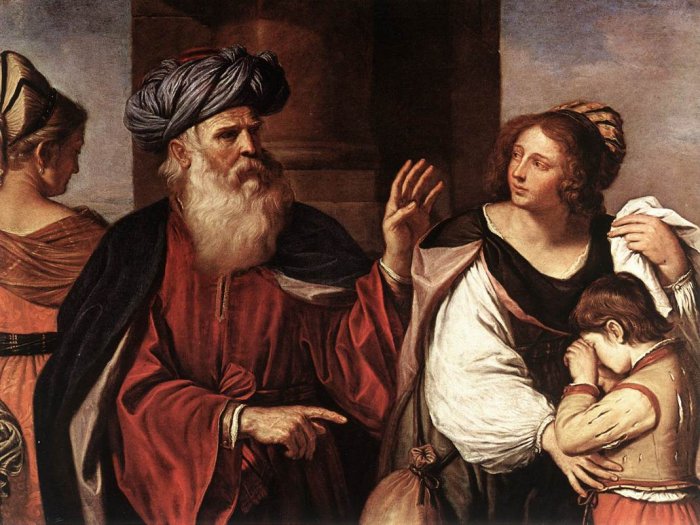
Throw out the slave woman and her child
woman.
In Paul’s allegorical interpretation of Abraham’s family he does a brave and terrible thing: he identifies the slave woman Hagar with the Jewish Torah and Sarah, Abraham’s wife with his gospel to the Gentiles. It is calculated slap in the face for those who want to Gentile converts to live by the Torah. He turns the usual identification of Israel with Abraham, Sarah and Isaac on its head, giving this identity to Gentile believers, leaving Torah- adherents to be cast out as slaves.
There is nobility in Paul’s words about the Jerusalem who is free and the mother of those who trust the promise as Abraham did, but we can’t absolve him of blackening the faith of others (orthodox Jews) in order to defend his own faith. His easy acceptance (within an allegory, to be sure) of the second rate status of slaves also makes me a little uncomfortable, although not more uncomfortable than Jesus’ parables about slaves (usually called “servants” in polite bibles)
Of course, I’m happy to accept the historical, time-bound nature of our Scriptures, but I worry about their effect on those who don’t.
Mark 8:11-26
11 The Pharisees came and began to argue with him, asking him for a sign from heaven, to test him. 12And he sighed deeply in his spirit and said, ‘Why does this generation ask for a sign? Truly I tell you, no sign will be given to this generation.’ 13And he left them, and getting into the boat again, he went across to the other side.
14 Now the disciples had forgotten to bring any bread; and they had only one loaf with them in the boat. 15And he cautioned them, saying, ‘Watch out—beware of the yeast of the Pharisees and the yeast of Herod.’ 16They said to one another, ‘It is because we have no bread.’ 17And becoming aware of it, Jesus said to them, ‘Why are you talking about having no bread? Do you still not perceive or understand? Are your hearts hardened? 18Do you have eyes, and fail to see? Do you have ears, and fail to hear? And do you not remember? 19When I broke the five loaves for the five thousand, how many baskets full of broken pieces did you collect?’ They said to him, ‘Twelve.’ 20‘And the seven for the four thousand, how many baskets full of broken pieces did you collect?’ And they said to him, ‘Seven.’ 21Then he said to them, ‘Do you not yet understand?’ 
22 They came to Bethsaida. Some people brought a blind man to him and begged him to touch him. 23He took the blind man by the hand and led him out of the village; and when he had put saliva on his eyes and laid his hands on him, he asked him, ‘Can you see anything?’ 24And the man looked up and said, ‘I can see people, but they look like trees, walking.’ 25Then Jesus laid his hands on his eyes again; and he looked intently and his sight was restored, and he saw everything clearly. 26Then he sent him away to his home, saying, ‘Do not even go into the village.’
…………………………………………………………..
Jesus used yeast as an image of spiritual influence: a little makes a huge difference. He warns his disciples against the influence of the Pharisees (who feed the people legalistic teaching) and the Herodians, (who encourage the people to accept a false monarchy). Why can’t the disciples see, after his public signs of feeding, that he is the true teacher and king of Israel and the Gentiles? He invites them to see the significance of the numbers of baskets (12=Israel; 7=Gentiles).
Mark answers the question by inserting a story of how Jesus heals a blind man. The implication is that the disciples are blind. Mark’s insistence on the blindness of Jesus’ nearest followers is a disturbing element in the gospel, which has nevertheless been verified over and over again in the history of the church. One of my relatives, a church elder in South Africa, believed in Apartheid, as did his church.

