This blog provides a meditation on the Episcopal daily readings along with a headline from world news:
CHINA’S CANCER VILLAGES OFFICIAL DENIAL

cancer villages are not part of the nation
Daniel 6:1-15
6It pleased Darius to set over the kingdom one hundred and twenty satraps, stationed throughout the whole kingdom, 2and over them three presidents, including Daniel; to these the satraps gave account, so that the king might suffer no loss. 3Soon Daniel distinguished himself above all the other presidents and satraps because an excellent spirit was in him, and the king planned to appoint him over the whole kingdom. 4So the presidents and the satraps tried to find grounds for complaint against Daniel in connection with the kingdom. But they could find no grounds for complaint or any corruption, because he was faithful, and no negligence or corruption could be found in him. 5The men said, ‘We shall not find any ground for complaint against this Daniel unless we find it in connection with the law of his God.’
6 So the presidents and satraps conspired and came to the king and said to him, ‘O King Darius, live for ever! 7All the presidents of the kingdom, the prefects and the satraps, the counsellors and the governors, are agreed that the king should establish an ordinance and enforce an interdict, that whoever prays to anyone, divine or human, for thirty days, except to you, O king, shall be thrown into a den of lions. 8Now, O king, establish the interdict and sign the document, so that it cannot be changed, according to the law of the Medes and the Persians, which cannot be revoked.’ 9Therefore King Darius signed the document and interdict.
10 Although Daniel knew that the document had been signed, he continued to go to his house, which had windows in its upper room open towards Jerusalem, and to get down on his knees three times a day to pray to his God and praise him, just as he had done previously. 11The conspirators came and found Daniel praying and seeking mercy before his God. 12Then they approached the king and said concerning the interdict, ‘O king! Did you not sign an interdict, that anyone who prays to anyone, divine or human, within thirty days except to you, O king, shall be thrown into a den of lions?’ The king answered, ‘The thing stands fast, according to the law of the Medes and Persians, which cannot be revoked.’ 13Then they responded to the king, ‘Daniel, one of the exiles from Judah, pays no attention to you, O king, or to the interdict you have signed, but he is saying his prayers three times a day.’
14 When the king heard the charge, he was very much distressed. He was determined to save Daniel, and until the sun went down he made every effort to rescue him. 15Then the conspirators came to the king and said to him, ‘Know, O king, that it is a law of the Medes and Persians that no interdict or ordinance that the king establishes can be changed.’
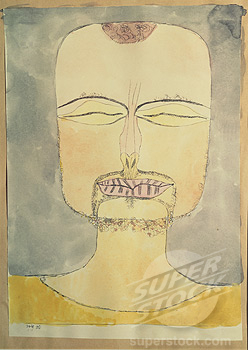
the nakedness of prayer
The right to pray as one believes is a fundamental human right. At present there are many places where this right is denied or threatened. Some Moslem countries deny this right to Christians and other religions, while using the apostasy law to forbid any former Moslem practicing a new faith. In China churches which are not approved by the state are subject to persecution and there has been harassment of Buddhists in Tibet. Christianity has a poor record historically in this regard, having persecuted Jews, Moslems and heretics until recent times. The genocidal war in the former Yugoslavia was fuelled partly by vicious Orthodox Christian prejudice.
Yet the act of prayer is peaceful and threatens nobody. A person at prayer is most vulnerable. We may not share that person’s faith but we may nevertheless believe that any honest prayer will be answered. All persons of faith should cultivate respect for the act of prayer and the right to pray.
The story of Daniel is a coded attack on the Greek conquerors of Israel and an encouragement to fellow Jews to stand firm in their faith against cultural pressure and persecution. Prayer is an especial threat to tyrants as it may be done silently, even while a person is tortured; and it is directed to a power that transcends that of the tyrant. Those who have trespassed into military territory to pray beside nuclear weapons as a witness against their obscene threat may expect to be convicted of trespass but their prayer remains a great and justifiable provocation.
Luke 5:12-26
Jesus Cleanses a Leper
12 Once, when he was in one of the cities, there was a man covered with leprosy. When he saw Jesus, he bowed with his face to the ground and begged him, ‘Lord, if you choose, you can make me clean.’ 13Then Jesus stretched out his hand, touched him, and said, ‘I do choose. Be made clean.’ Immediately the leprosy left him. 14And he ordered him to tell no one. ‘Go’, he said, ‘and show yourself to the priest, and, as Moses commanded, make an offering for your cleansing, for a testimony to them.’ 15But now more than ever the word about Jesus spread abroad; many crowds would gather to hear him and to be cured of their diseases. 16But he would withdraw to deserted places and pray.
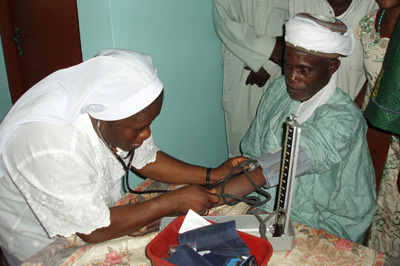
including AIDS victims in community
17 One day, while he was teaching, Pharisees and teachers of the law were sitting nearby (they had come from every village of Galilee and Judea and from Jerusalem); and the power of the Lord was with him to heal. 18Just then some men came, carrying a paralysed man on a bed. They were trying to bring him in and lay him before Jesus; 19but finding no way to bring him in because of the crowd, they went up on the roof and let him down with his bed through the tiles into the middle of the crowd in front of Jesus. 20When he saw their faith, he said, ‘Friend, your sins are forgiven you.’ 21Then the scribes and the Pharisees began to question, ‘Who is this who is speaking blasphemies? Who can forgive sins but God alone?’ 22When Jesus perceived their questionings, he answered them, ‘Why do you raise such questions in your hearts? 23Which is easier, to say, “Your sins are forgiven you”, or to say, “Stand up and walk”? 24But so that you may know that the Son of Man has authority on earth to forgive sins’—he said to the one who was paralysed—‘I say to you, stand up and take your bed and go to your home.’ 25Immediately he stood up before them, took what he had been lying on, and went to his home, glorifying God. 26Amazement seized all of them, and they glorified God and were filled with awe, saying, ‘We have seen strange things today.’
Luke shows Jesus creating “God’s community” wherever he goes. The excluded leper is included by word and touch. The inclusion is the healing. Community is not to be confused with popularity. That’s why Jesus withdraws at times into the intimate community which he shares with God. His prayer indicates the mystery of his own relationship with the Father.
In the story of the paralysed man we find that the sick person is already included by his friends who bring him to Jesus, forcing an entry into “God’s house” where Jesus is teaching. Jesus recognises the existence of the community created by them when he calls the sick person simply “fellow man” (Greek “anthropos” translated “friend” above.). He later uses the term “Son of man” by which he means himself-and-his-community. He “joins” the community these men have created and announces its basis: the generosity of God who forgives sin and gives health. The astonishing healing power of God’s human community is one of Luke’s main themes, which he carries over from his gospel into the book of The Acts.
 Emmock's Blog
“Yet the act of prayer is peaceful and threatens nobody.”
Please tell me you don’t mean this . . . .
Thanks Jeff! I’m describing prayer from a purely objective quasi-legal stance here. A person praying is not abusing, hitting or shooting others. (unless I suppose you want to take the suicide bomber’s “Allahu akbar” as a prayer -it’s more of a warcry, in truth). The content of prayer may not be peaceful. Theologically we may view true prayer as world-shaking, and false prayer as idolatry. Indeed I note the tyrant’s hatred of prayer to a power greater than his own. I’m not sure what you’re saying here, maybe I’m missing something important. I just mean that the average cop ought to see a praying person as peaceful.
Give me your thoughts, brother….