This blog provides a meditation on the Episcopal daily readings along with a headline from world news:
Putin-chosen by the people? 

Genesis 41:46-57
46 Joseph was thirty years old when he entered the service of Pharaoh king of Egypt. And Joseph went out from the presence of Pharaoh, and went through all the land of Egypt.47During the seven plenteous years the earth produced abundantly.48He gathered up all the food of the seven years when there was plenty* in the land of Egypt, and stored up food in the cities; he stored up in every city the food from the fields around it.49So Joseph stored up grain in such abundance—like the sand of the sea—that he stopped measuring it; it was beyond measure.
50 Before the years of famine came, Joseph had two sons, whom Asenath daughter of Potiphera, priest of On, bore to him.51Joseph named the firstborn Manasseh,* ‘For’, he said, ‘God has made me forget all my hardship and all my father’s house.’52The second he named Ephraim,* ‘For God has made me fruitful in the land of my misfortunes.’
53 The seven years of plenty that prevailed in the land of Egypt came to an end;54and the seven years of famine began to come, just as Joseph had said. There was famine in every country, but throughout the land of Egypt there was bread.55When all the land of Egypt was famished, the people cried to Pharaoh for bread. Pharaoh said to all the Egyptians, ‘Go to Joseph; what he says to you, do.’56And since the famine had spread over all the land, Joseph opened all the storehouses,* and sold to the Egyptians, for the famine was severe in the land of Egypt.57Moreover, all the world came to Joseph in Egypt to buy grain, because the famine became severe throughout the world.
 As the story unfolds we learn more of God’s dream for Joseph: his fruitfulness of character which is the manifestation of God’s blessing brings life not only to Egyptians but also to other peoples who are suffering famine. In his own life this fruitfulness is shared with his Egyptian wife Asenath who bears two children, the first of whom is named “forgetfulness”, that is his birth seems to allow Joseph to put his own origins behind him (we’ll soon learn how wrong this expectation is), and the second, “fruitfulness” which recognises God’s lavish gift of life.Again we can see traditional folk-tale and magic elements in this story, but we should note that the means of fruitfulness are good economic management, generous provision, marraige and the birth of children, all of which are understood, by Joseph at least, as gifts of God.
The story reminds me how in my own experience fruitfulness has come from fruitful people rather than from fruitful policies alone. Such people seem to carry God’s blessing (others call it charisma or good luck) so that ways of action which have been unfruitful in the hands of others, blossom in theirs. Their sucess has often been as much due to qualities which I would have called irrelevant as to those which precisely fitted the task. Bible stories encourage the reader to wonder at the capacities of human character.
Mark 3:7-19
A Multitude at the Lakeside
7 Jesus departed with his disciples to the lake, and a great multitude from Galilee followed him;8hearing all that he was doing, they came to him in great numbers from Judea, Jerusalem, Idumea, beyond the Jordan, and the region around Tyre and Sidon.9He told his disciples to have a boat ready for him because of the crowd, so that they would not crush him;10for he had cured many, so that all who had diseases pressed upon him to touch him.11Whenever the unclean spirits saw him, they fell down before him and shouted, ‘You are the Son of God!’12But he sternly ordered them not to make him known.<!– 13 –>
Jesus Appoints the Twelve 

13 He went up the mountain and called to him those whom he wanted, and they came to him.14And he appointed twelve, whom he also named apostles,* to be with him, and to be sent out to proclaim the message,15and to have authority to cast out demons.16So he appointed the twelve:* Simon (to whom he gave the name Peter);17James son of Zebedee and John the brother of James (to whom he gave the name Boanerges, that is, Sons of Thunder);18and Andrew, and Philip, and Bartholomew, and Matthew, and Thomas, and James son of Alphaeus, and Thaddaeus, and Simon the Cananaean,19and Judas Iscariot, who betrayed him.
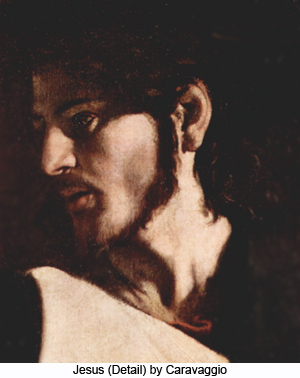
Mark also wants his readers to wonder at the capacities of the human character of Jesus, the one in whom God’s goodness fights against evil on earth. The lake for Mark is always a place of potential danger, where chaos may rage in storms or in the presence of evil spirits. Jesus is depicted as facing the danger and liberating people from the evil which has invaded their lives. The mountain on the other hand is always a place of revelation, in this case the revelation that Jesus’ authority can be transmitted to others, to the “apostles” that is those who will be “sent out” as bearers of God’s goodness, and who are twelve in number because they represent the tribes of Israel who are called “God’s people” and “God’s son”. The fact that some disciples have nicknames may be an indication of Jesus’ delicate humour-Simon the flaky one is called a rock (and he will become firm), James and John the quick-tempered ones are called thunderbolts (and they will become powerful leaders), the other Simon who has been a Canaanite, a revolutionary, is called Jihadi (and he will be a warrior for the gospel). Perhaps every one of the twelve had such gospel nicknames. Was Iscariot also a nickname? It may mean “dagger-man” or simply “someone from Kerioth”. None of the gospels tries to disguise the fact that one of Jesus’ chosen apostles was a traitor. Judas’ deliberate treachery separates him from the others but in a sense his betrayal points to the failure of all twelve to show loyalty to Jesus when put to the test. This story warns me that daily companionship with Jesus (such as a bible blogger might have) does not guarrantee true discipleship. There will be failures of commitment from which however I may learn a better courage.
 Emmock's Blog