This blog provides a meditation on the Episcopal daily readings along with headline from world news
Scottish town Dull links with Oregon town Boring 

Galatians 2:11-21
15 We ourselves are Jews by birth and not Gentile sinners; 16yet we know that a person is justified* not by the works of the law but through faith in Jesus Christ.* And we have come to believe in Christ Jesus, so that we might be justified by faith in Christ,* and not by doing the works of the law, because no one will be justified by the works of the law. 17But if, in our effort to be justified in Christ, we ourselves have been found to be sinners, is Christ then a servant of sin? Certainly not! 18But if I build up again the very things that I once tore down, then I demonstrate that I am a transgressor. 19For through the law I died to the law, so that I might live to God. I have been crucified with Christ; 20and it is no longer I who live, but it is Christ who lives in me. And the life I now live in the flesh I live by faith in the Son of God,* who loved me and gave himself for me. 21I do not nullify the grace of God; for if justification* comes through the law, then Christ died for nothing.
Let’s strip this passage of some of its Greek rhetoric and provide a rough paraphrase:
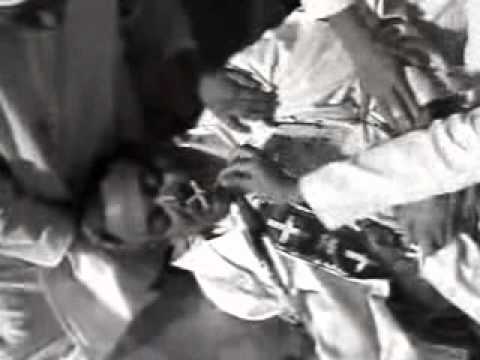
crucified with Christ-Archbishop Oscar Romero, El Salvador
I think Paul is serious about people being made right. He means that they are enabled to live well and justly. No religion (and we should say, no ideology) , not even the Torah, does more than feed the false identity we contruct for ourselves in partnership with family, community, society. That social/ religious identity insists on conformity and is ruthless towards anyone who challenges it. The Torah crucifies the liberating Messiah. Discipleship of the liberator and trust in him makes us step out from our false identity and take our places on the cross beside Messiah Jesus. There we “die” to all imprisoning religion and ideology and find ourselves alive with a new identity: Jesus lives within us. We don’t suddenly become perfect-Paul always talks about “being saved” meaning a process-but as earth-bound human beings we live in the kindness of God and the way of Jesus. That’s how, according to Paul, we are “made right.” The heart of this salavtion-which Luther shirked, I think- is being crucified with Christ. Paul describes this in other language-believers should share the downward mobility of Christ, his humility and obedience to death; they should share the sufferings of Christ so that they may also share his glory-but nowhere does he suggest that it is a purely inward experience: it is a real choice. Our everyday lives (“The life I now live in the flesh”) must be lived by trust in the son of God who loved us and gave himself for us. Paul’s message meets the message of Jesus who asked disciples to take up their cross and follow him. For both Jesus and his great interpreter, the cross does not mean passive suffering but active engagement in the battle against the powers of evil by people who don’t count the cost or heed the wounds.

