This blog provides a meditation on the Episcopal daily readings along with a headline from world news:
Religious interests attack Melinda Gates for providing contraceptives in poor countries 

ROMANS 8 26-32
26 Likewise the Spirit helps us in our weakness; for we do not know how to pray as we ought, but that very Spirit intercedes* with sighs too deep for words.27And God,* who searches the heart, knows what is the mind of the Spirit, because the Spirit* intercedes for the saints according to the will of God.*
28 We know that all things work together for good* for those who love God, who are called according to his purpose.29For those whom he foreknew he also predestined to be conformed to the image of his Son, in order that he might be the firstborn within a large family.*30And those whom he predestined he also called; and those whom he called he also justified; and those whom he justified he also glorified.
Honesty compels me to write about Paul’s doctrine of the Spirit. It’s clear that by Spirit he means a presence of God in the universe which encourages trust in Messiah Jesus, animates the shared life of the Christian community, and gives believers a taste of God’s ultimate future here and now. OK, but the whole idea of God’s presence in the universe is problematic for me, as my whole understanding of God is based on the ABSENCE of God from his world. He is beyond. Yes, people may trust in the One (Father) who is beyond; and his character may be mediated in the world by a human being (Son) who shares his nature. But what about the Spirit? Can there really be a sort of supernatural spook floating about the universe? Certainly Paul portrays the Spirit as “the beyond in the midst of life”, active in the lives of men and women.
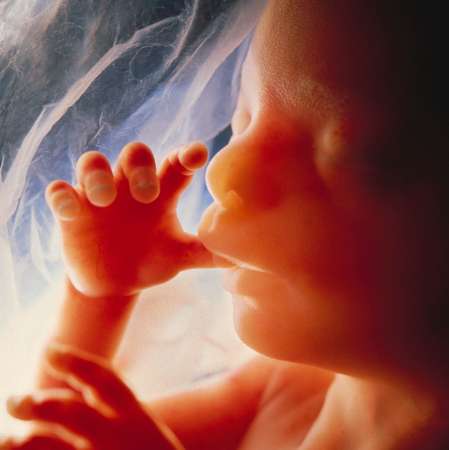
God’s purpose to give birth…
God is absent from the universe as a pregnant woman is “absent” from her womb. Of course the whole process of the development of the foetus depends on her life but there is a horizon which prevents direct transmission between one life and the other. God has withdrawn from the process of creation so that it may have independence and freedom, but the process itself depends on God’s life and purpose. To share the Spirit is to share, with all creatures, God’s evolutionary purpose of giving birth to his true children. The biblical expression of this is found in The Acts 17:28 where the author puts on the lips of Paul the quotation that God is the one “in whom we live and move and have our being.”
This purpose is not an afterthought, Paul says. It is the eternal purpose of God by which the creatures are “called” (created),” made right” (justified) and “given splendour” (saved). People get hung up on the predestinaton here, but there is nothing in this to suggest that anything less than all creation is predestined to share the life of God. The process may seem to many to be change and destruction without purpose but to those who love God “everything works together for good.” This is optimistic but not shallow: it is rooted in the struggle between life and death which is decided in the crucifixion and resurrection of Jesus.
 Emmock's Blog