This blog provides a meditation on the Episcopal daily readings along with a headline from world news:
Burmese refugees from racial prejudice

escape on a boat
Psalm 99
Praise to God for His Holiness
1 The Lord is king; let the peoples tremble! He sits enthroned upon the cherubim; let the earth quake!
2 The Lord is great in Zion; he is exalted over all the peoples.
3 Let them praise your great and awesome name. Holy is he!
4 Mighty King,* lover of justice, you have established equity;
you have executed justice and righteousness in Jacob.
5 Extol the Lord our God; worship at his footstool. Holy is he!
6 Moses and Aaron were among his priests, Samuel also was among those who called on his name. They cried to the Lord, and he answered them.
7 He spoke to them in the pillar of cloud; they kept his decrees, and the statutes that he gave them.
8 O Lord our God, you answered them; you were a forgiving God to them, but an avenger of their wrongdoings.
9 Extol the Lord our God, and worship at his holy mountain; for the Lord our God is holy.
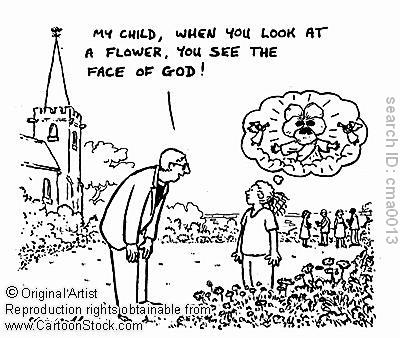 The holiness of God is a primary fact in Jewish faith: God is not human, nor is he any kind of worldly being. God is other, a mystery, who shows himself to his people and to the world as eternal justice, which he desires to be established on the earth. This is a distinctive theology which places the observance of justice at the heart of faith. All the ritual religion of Israel is only a means of worshipping and obeying the God of justice. The psalm itself celebrates the one justice of God which has established order in the universe and in the affairs of humanity.
Christian worship, which responds to the revelation of God’s love in Jesus can easily become sloppy, sentimental, and over-familiar. The God who loves is also just and holy. The one who is intimate with our hearts is the one who comes from unimaginable distance. “Let them praise your great and awesome name. Holy is he!”
John 3:22-36
Jesus and John the Baptist
25 Now a discussion about purification arose between John’s disciples and a Jew.*26They came to John and said to him, ‘Rabbi, the one who was with you across the Jordan, to whom you testified, here he is baptizing, and all are going to him.’27John answered, ‘No one can receive anything except what has been given from heaven.28You yourselves are my witnesses that I said, “I am not the Messiah,* but I have been sent ahead of him.”29He who has the bride is the bridegroom. The friend of the bridegroom, who stands and hears him, rejoices greatly at the bridegroom’s voice. For this reason my joy has been fulfilled.30He must increase, but I must decrease.’*<!– 31 –>
The One Who Comes from Heaven
31 The one who comes from above is above all; the one who is of the earth belongs to the earth and speaks about earthly things. The one who comes from heaven is above all.32He testifies to what he has seen and heard, yet no one accepts his testimony.33Whoever has accepted his testimony has certified* this, that God is true.34He whom God has sent speaks the words of God, for he gives the Spirit without measure.35The Father loves the Son and has placed all things in his hands.36Whoever believes in the Son has eternal life; whoever disobeys the Son will not see life, but must endure God’s wrath.

Jonathan Myrick Daniels and children
All the bible authors have John insist that he is only a forerunner of Messiah Jesus. It seems possible that this expresses their conviction rather than his. The figure of the Baptist allows the gispel authors a link between the history of Israel and the hist0ry of the assembly of Jesus. He sums up the Torah tradition of Israel by recalling them to justice; and the prophetic tradition by pointing to the Messiah. Here he states that God has placed the gift of eternal life in the hands of his son, who offers it freely to all. Those who reject the offer have rejected life, closed themelves to God’s love and live “in his wrath.”
Today the Episcopal church remembers Jonathan Myrick Daniels a young (white) seminarian who joined Martin Luther King’s marches of witness in 1965. In Fort Deposit, Alabama when a young female colleague was threatened with a shotgun, Jonathan stepped in the way and took its full blast, dying instantly. He “believed in the Son”; those who killed him and other witnesses did not. The one who came from heaven revealed heavenly things like justice; the one from earth revealed earthly things like prejudice. Jonathan wrote modestly of how mixed his motives were but that he had already died with Christ, and that his true life was hidden with God. The church affirms his sacrifice and his hope.
 Emmock's Blog
I know that you’re not into awards, but I appreciate your blog and the support you’ve shown for mine and I’ve nominated you for the Commenter Award, Congratulations! You can read more about it at faithrises.com – Thanks Mike!
Thanks as always, Faith. I enjoy keeeping up with you day by day. Did you watch the Olympics? I was shouting for Michael Phelps as well as our Scottish athletes.
Mike