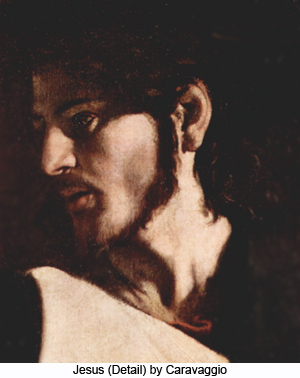
This blog provides a meditation on the Episcopal daily readings along with a headline from world news:
Taliban shoot teenage woman opposed to their oppression

Malala Yousafzai shot in the head by Taliban
Acts 23:23-35
Paul Sent to Felix the Governor
23 Then he summoned two of the centurions and said, ‘Get ready to leave by nine o’clock tonight for Caesarea with two hundred soldiers, seventy horsemen, and two hundred spearmen.24Also provide mounts for Paul to ride, and take him safely to Felix the governor.’25He wrote a letter to this effect:
26 ‘Claudius Lysias to his Excellency the governor Felix, greetings.27This man was seized by the Jews and was about to be killed by them, but when I had learned that he was a Roman citizen, I came with the guard and rescued him.28Since I wanted to know the charge for which they accused him, I had him brought to their council.29I found that he was accused concerning questions of their law, but was charged with nothing deserving death or imprisonment.30When I was informed that there would be a plot against the man, I sent him to you at once, ordering his accusers also to state before you what they have against him.*’
31 So the soldiers, according to their instructions, took Paul and brought him during the night to Antipatris.32The next day they let the horsemen go on with him, while they returned to the barracks.33When they came to Caesarea and delivered the letter to the governor, they presented Paul also before him.34On reading the letter, he asked what province he belonged to, and when he learned that he was from Cilicia,35he said, ‘I will give you a hearing when your accusers arrive.’ Then he ordered that he be kept under guard in Herod’s headquarters.*
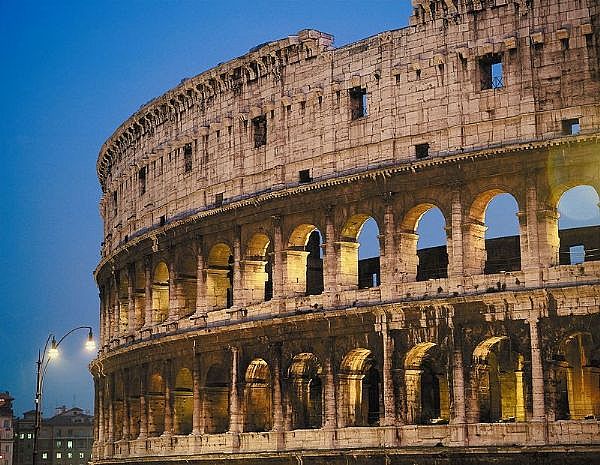
The centre of the known world
Luke shows off his knowledge of the Roman system of government, albeit he presents to the reader a sanitised version of the grubby business of maintaining the conqueror’s peace in distant territories. Clearly he would not have had access to Claudius Lysias’ letter to Felix but that doesn’t bother him: he invents it anyway. Doubtless any religious disturbance amongst Jews was a pain in the neck for Felix and would have been treated as such. Still, Luke’s story is movng Paul towards his untimate goal of Rome itself which Luke, prophetically, sees as the centre not only of the Empire but also of the Christian faith. From his vantage point, writing in AD 90, Luke believed that Paul’s removal to Rome (and his subsequent martyrdom in Rome) were part of God’s plan to extend the ministry of the risen Jesus to the political capital of the world.
Luke 7:18-35
Messengers from John the Baptist
18 The disciples of John reported all these things to him. So John summoned two of his disciples19and sent them to the Lord to ask, ‘Are you the one who is to come, or are we to wait for another?’20When the men had come to him, they said, ‘John the Baptist has sent us to you to ask, “Are you the one who is to come, or are we to wait for another?” ’21Jesus* had just then cured many people of diseases, plagues, and evil spirits, and had given sight to many who were blind.22And he answered them, ‘Go and tell John what you have seen and heard: the blind receive their sight, the lame walk, the lepers* are cleansed, the deaf hear, the dead are raised, the poor have good news brought to them.23And blessed is anyone who takes no offence at me.’
24 When John’s messengers had gone, Jesus* began to speak to the crowds about John:* ‘What did you go out into the wilderness to look at? A reed shaken by the wind?25What then did you go out to see? Someone* dressed in soft robes? Look, those who put on fine clothing and live in luxury are in royal palaces.26What then did you go out to see? A prophet? Yes, I tell you, and more than a prophet.27This is the one about whom it is written,
“See, I am sending my messenger ahead of you, who will prepare your way before you.”
28I tell you, among those born of women no one is greater than John; yet the least in the kingdom of God is greater than he.’29(And all the people who heard this, including the tax-collectors, acknowledged the justice of God,* because they had been baptized with John’s baptism.30But by refusing to be baptized by him, the Pharisees and the lawyers rejected God’s purpose for themselves.)
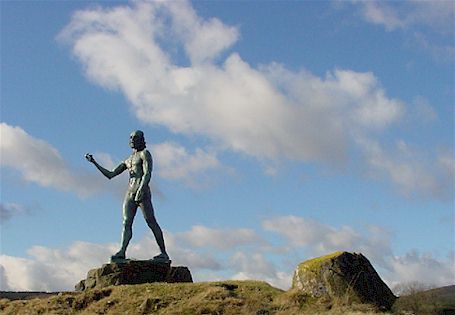
Rodin: John the Baptist at Glenkiln, Scotland
31 ‘To what then will I compare the people of this generation, and what are they like?32They are like children sitting in the market-place and calling to one another,
“We played the flute for you, and you did not dance; we wailed, and you did not weep.”
33For John the Baptist has come eating no bread and drinking no wine, and you say, “He has a demon”;34the Son of Man has come eating and drinking, and you say, “Look, a glutton and a drunkard, a friend of tax-collectors and sinners!”35Nevertheless, wisdom is vindicated by all her children.’
The Gospel writers, in their different ways, all try to show respect for John the Dipper, while also putting him firmly in his place. This indicates that followers of John the Dipper continued to venerate him, possible at the expense of Jesus, for many years after their ministries. Luke has represented John as demanding repentance before the coming of the Messiah-Judge. Now he asks if Jesus can possibly be this messiah. Jesus simply points to his ministry of teaching and healing and directs John to the words of the prophet. Clearly however, it’s possible to be “offended” by Jesus. This is a key word in the gospels: it means, “made to stumble” indicating that the person in question is a barrier to normal progress. Obviously the Pharisees are “offended” by Jesus, but perhaps John will see the truth. Luke then quotes Jesus’ praise of John and his ministry: he is one of the greatest of human beings but not part of God’s gracious rule revealed in Jesus. Therefore John’s true greatness is as the one who points forward to Jesus.
Luke notes that the Pharisees had also been “offended” by John whereas the common people had believed in him. Jesus attacks their lack of faith by comparing them to children whose companions refuse to play either weddings or funerals. The Pharisees rejected John as too strict and Jesus as too lax. They just wouldn’t play God’s game.
Much Christian propaganda minimises the possibility of people being offended by Jesus, because it forgets the gospel pictures of Jesus and the Pauline picture of the crucified Messiah, in favour of a saccharine message of salvation which can offend nobody. Paul magnificently calls Jesus the “yes” to all God’s promises, but he is not simply God’s “yes” to everything human. To say yes to sinners is to say no to self-righteousness, to say yes to the poor is to say no to the rich, to say yes to enemies is to say no to certain sorts of friends, to say yes to the cross is to say no to safety gained by cowardice. Without the implicit no, Jesus’ yes becomes a sloppy permissiveness. That’s why Jesus whose gospel proclaims the “Yes” of God, can recognise the greatness of the one who proclaimed God’s “No.”
 Emmock's Blog
Hello MIke,
Your final paragraph today reminds me of a saying of Malcolm X that if you don’t stand for something you’ll fall for anything and I feel that is very true. Trying to play the middle ground in all things I feel is weak. This can be poor vs. rich, authority vs. those without a voice, military powerful vs. defenseless. It often needs great courage, but that is where I think by trying to follow the ways of Jesus, where when doing so shows what is right, is so helpful.
Steve.
Yup! This Sunday’s lectionary includes the story of the rich young man. The health of the church might be guaged by finding out how many preachers told their congregations that Jesus meant what he said……
Good to hear you. Blessings as always.