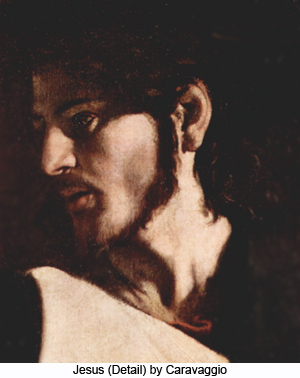
This blog gives a meditation on the Episcopal daily readings along with a headline from world news:
FAT FRENCHMAN SALUTES PUTIN AS DEMOCRAT

Gerard Depardieu
Isaiah 52:3-6
3 For thus says the Lord: You were sold for nothing, and you shall be redeemed without money.4For thus says the Lord God: Long ago, my people went down into Egypt to reside there as aliens; the Assyrian, too, has oppressed them without cause.5Now therefore, what am I doing here, says the Lord, seeing that my people are taken away without cause? Their rulers howl, says the Lord, and continually, all day long, my name is despised.6Therefore my people shall know my name; therefore on that day they shall know that it is I who speak; here am I.
The prophet speaks in God’s name to give a very commercial picture of the people’s exile. Once they went down to Egypt and were saved from famine. But the Assyrians got them for no return; therefore they still belong to their original owner, to God! The prophet gives to God a kind of grim humour. But he goes further. When God says “Here am I” he’s using a Hebrew expression which normally indicates a person responding to another’s call or invitation. Someone for example, calls a person’s name, and she responds, “Here am I.” God calls Moses and he responds, “Here am I.” This prophet imagines that God responds to the desperate calls, and even the frank disbelief of his people, by answering, as a friend or family member might, “Here am I.” On the ground of course this response is in the form of a historical event, the fall of Babylon to the Persians, who will allow the Israelites to return to their homeland. A set of complex political events takes place, but the prophet hears it as a clearing of God’s throat, “Here am I.” Meister Eckhart, the great medieval philosopher and theologian once said, “God is like a man hiding from friend who gives himself away by clearing his throat.” John Bell and Graham Maule take this up in one of their hymns, speaking of Jesus resurrection, “near the grave of human violence/ the most precious word of life/ cleared his throat and ended silence/ for the good of us all.”
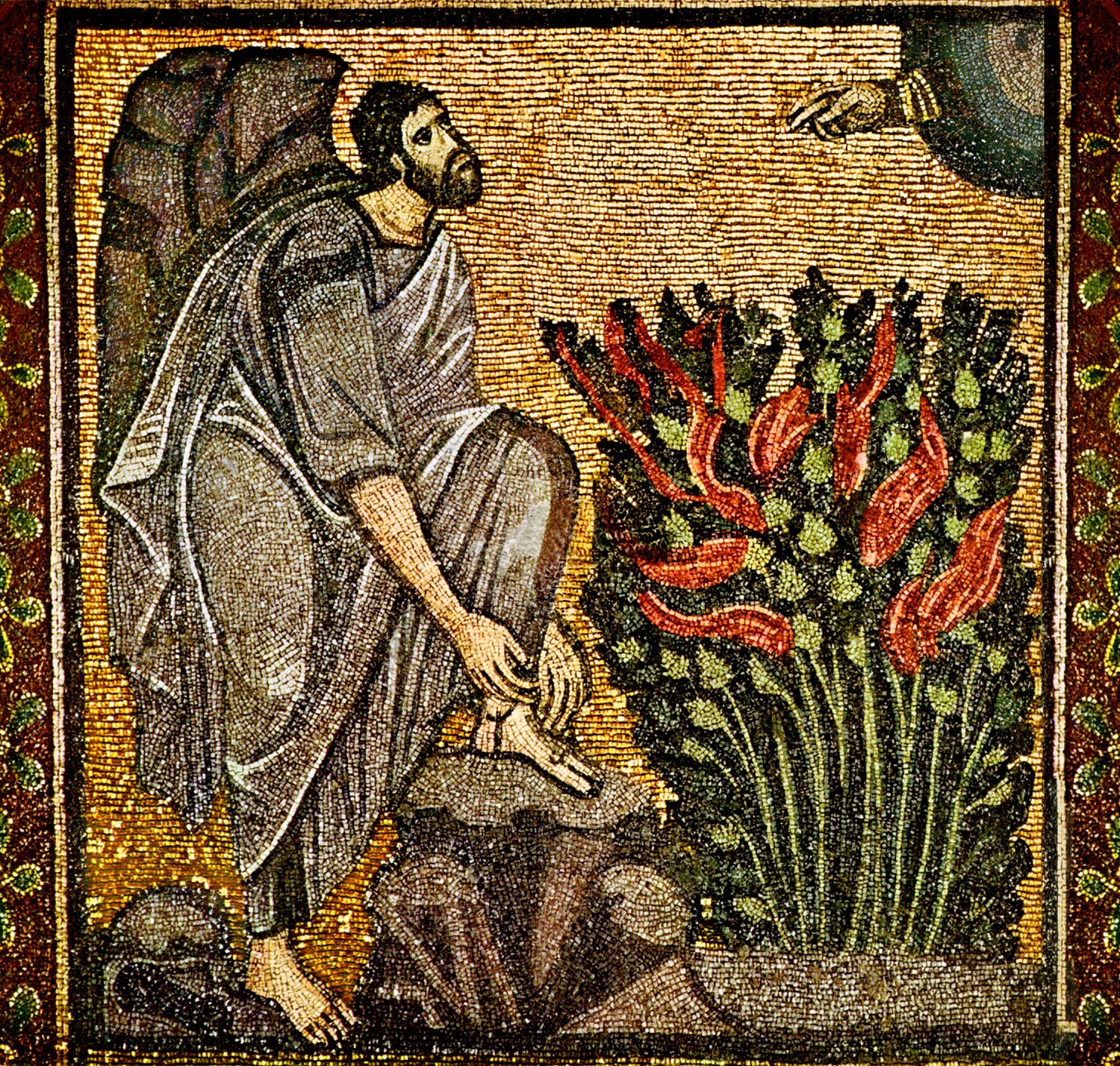
Moses says, “Here am I”
The hiddeness of God is a common experience of believing people. When “he should be” present to rescue or to comfort he is absent often enough to raise a serious question about his existence. Those (Israelites or Assyrians?) “who howled and despised God’s name”, certainly raised this question. But then, according to the prophet, if believers listen carefully to what’s happening in their midst, God clears his throat and answers the doubters, “Here am I.” He is absent as an almighty superman; he is present as a quiet voice.
John 2:1-11
The Wedding at Cana
2On the third day there was a wedding in Cana of Galilee, and the mother of Jesus was there.2Jesus and his disciples had also been invited to the wedding.3When the wine gave out, the mother of Jesus said to him, ‘They have no wine.’4And Jesus said to her, ‘Woman, what concern is that to you and to me? My hour has not yet come.’5His mother said to the servants, ‘Do whatever he tells you.’6Now standing there were six stone water-jars for the Jewish rites of purification, each holding twenty or thirty gallons.7Jesus said to them, ‘Fill the jars with water.’ And they filled them up to the brim.8He said to them, ‘Now draw some out, and take it to the chief steward.’ So they took it.9When the steward tasted the water that had become wine, and did not know where it came from (though the servants who had drawn the water knew), the steward called the bridegroom10and said to him, ‘Everyone serves the good wine first, and then the inferior wine after the guests have become drunk. But you have kept the good wine until now.’11Jesus did this, the first of his signs, in Cana of Galilee, and revealed his glory; and his disciples believed in him.
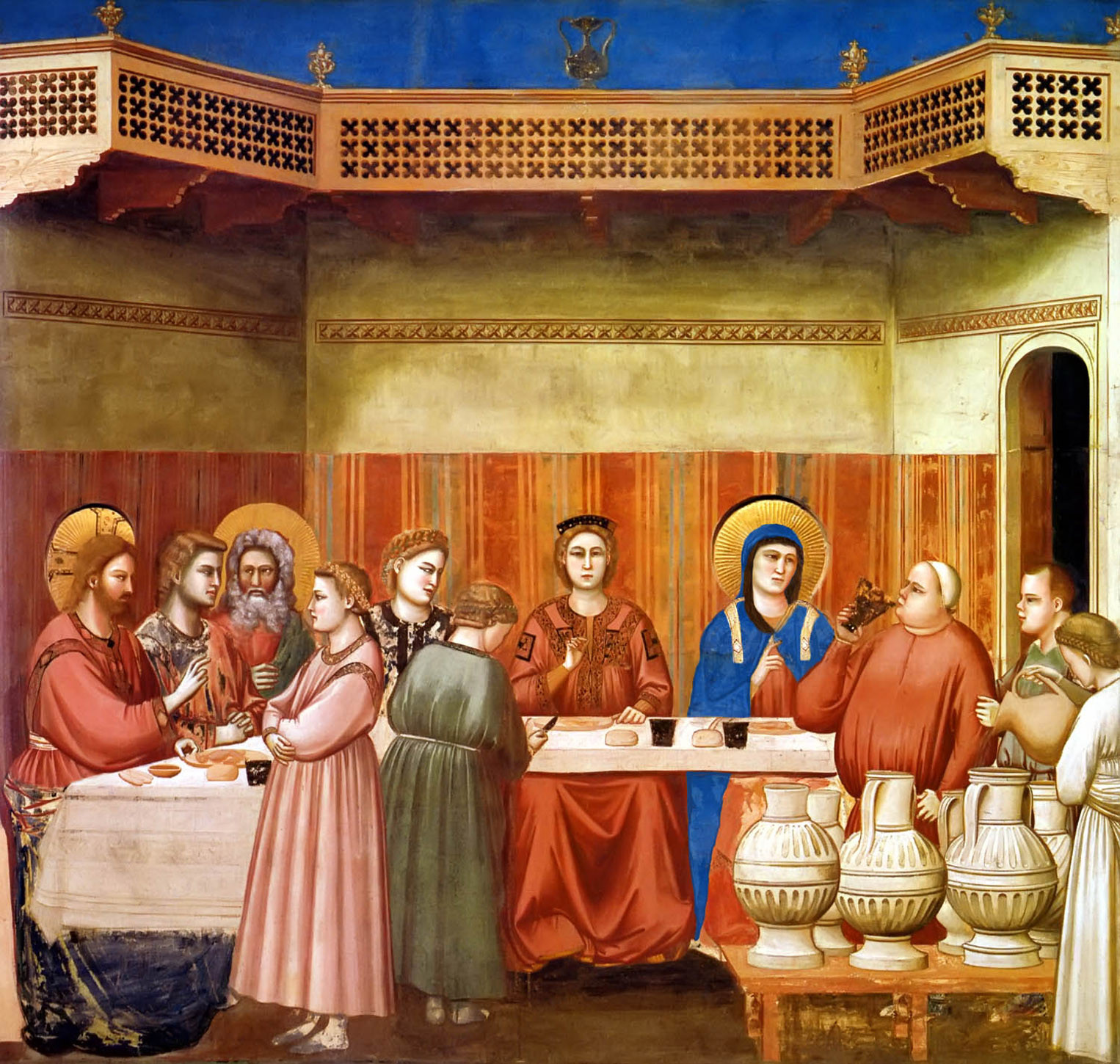
Wedding at Cana
Yes, here it is again. John says “he revealed his glory”, but what sort of glory is this? Providing extra drink at a country weddding? Part of the explanation lies in the ambiguity of the expresion “glory of God” in the Old Testament. It means that God himself remains hidden (No one can see him and live!) even while he reveals himself. When Ezekiel has a vision of God, what he actually sees is “the appearance of the likeness of the glory of God” (Ezekiel 1). In John’s gospel particularly the other part of the explanation is that in Jesus God is even more radically hidden while being revealed: the Word is made flesh. When God clears his throat, he speaks as a man.
God and also God’s Messiah were pictured as the bridegroom of the people. In this country wedding a very important bridegroom is secretly present. When his hour has come (for John this is the cross of Jesus) he will utterly transform the water of the old religion into the wine of the new, but for the moment he just kind of whispers, “Here am I” and brings joy to a village wedding.
The presence of God, through his son Jesus, in the very depths of human evil and suffering, is the glorious new wine that those who trust in him will drink. As a pastor, I am always moved to see people’s faith flowering in times of hardship,hurt and illness, as in their experience, the hidden One reveals his glory.
 Emmock's Blog
Hi Mike,
You mention Jesus’ “hour” (in Jn. 2:4) is his cross. The initial phrase in 2:1 (“on the third day”) could also point to this later time (the resurrection). Those end events are the hour when he is lifted up from the earth (starting with the cross) and is glorified (12:23,32-33).
Yet from the beginning, when the Word became flesh, his disciples saw his “glory,” for he was full of grace and truth (1:14). And (eventually) they all received grace upon grace, from his fullness (1:16). John the Baptist tells his disciples (some of whom become Jesus’ disciples) that, while he baptizes with water, the greater one is Jesus, on whom he sees the Spirit descend and remain; he is the one who (is full of the Spirit and) baptizes with the Holy Spirit; in this way John reveals him to Israel (1:31-34).
So the contrast between the Jewish water of purification in Jn. 2:6 and Jesus’ new wine fits in this pattern of John’s water followed by Jesus’ Spirit. Later Jesus will portray the main gift he will give his disciples (the Spirit) in terms of living water (7:38-39); Jesus says this “living water” will be given when he is glorified (at his coming hour). This contrast between natural water and living water also plays a part in Jesus’ conversation with the Samaritan woman in Jn. 4.
Just before Jesus’ hour, his extended teaching (Jn. 14-16) is especially about the Paraclete (Spirit) he will give his disciples when he departs. This Spirit of truth will glorify Jesus (16:13-14). This Spirit of truth is the glory that remains in Jesus, his grace and truth, which his disciples saw and heard through the words and works of Jesus. The miracle of new wine was a sign of the glory Jesus had and would give to his disciples when his hour truly came.
I agree with all this provided we keep in view the profound irony of John in seeing the glory in the flesh and humiliation of Jesus, especially in his cross, which for John is also his ascension. “If I am lifted up, I will draw all men to me.”
Happy New Year, Lucas!